Best Ski Boot Travel Bags for Protection and Convenience
Traveling with ski boots can be awkward and messy. The boots are bulky, heavy, and often wet or dirty after a day on the slopes.
A dedicated ski boot travel bag solves these problems by protecting your boots during transport and keeping them separate from your other gear and clothing.
Ski boot travel bags come in different styles to fit various needs. Some are simple tote-style bags that hold just your boots, while others include extra compartments for helmets, goggles, and other accessories.
The most important factors to consider are the bag’s size and capacity, its durability and water resistance, and how easy it is to carry. Padding and ventilation also matter since they protect your boots and help them dry out between ski days.
Best Ski Boot Travel Bags
We tested dozens of ski boot travel bags to find the ones that offer the best protection, durability, and convenience for your gear. Our top picks include options for every budget and travel style, from basic bags for occasional trips to heavy-duty roller bags for frequent travelers.
AIRTTUZ Ski Bag and Boot Bag Combo
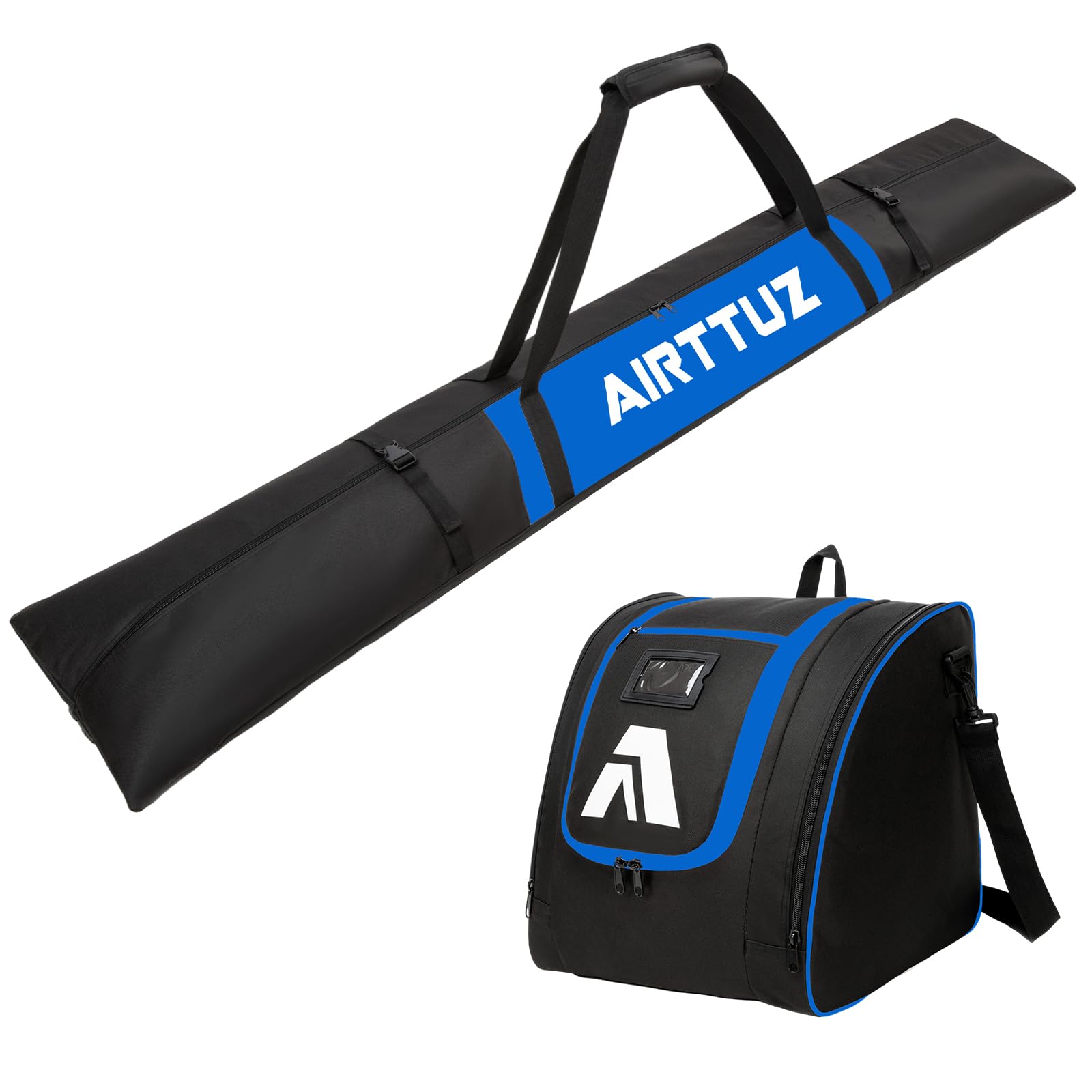
This two-piece set offers solid protection and good storage space for skis up to 200 cm. It’s a reliable choice for weekend trips to the mountain.
Pros
- The boot bag fits way more than just boots, with extra pockets that easily hold our helmet and goggles.
- Water-resistant material with 5mm foam padding kept our gear protected during our last ski trip.
- Shoulder straps on the boot bag made it comfortable to carry through the airport.
Cons
- The ski bag can feel bulky when fully packed, especially in tight spaces.
- Zippers require some effort to close when the bag is stuffed to capacity.
- The material attracts dirt and scuffs fairly easily.
The boot bag surprised us with how much we could fit inside. We managed to pack our boots, helmet, goggles, and even extra gloves in the side compartments.
The ski bag accommodates our 190 cm skis with room to spare. The padding feels substantial enough to protect our equipment from bumps during travel.
We appreciated that the water-resistant coating kept everything dry when we had to walk through slushy parking lots. Carrying everything was easier than we expected.
The boot bag’s padded straps distribute weight well across our shoulder. The ski bag has simple handles that work fine for short distances, though we wish it had a shoulder strap option too.
The construction feels durable for the price point. We noticed the stitching held up well even after stuffing the bags full multiple times.
The zippers work smoothly when the bags aren’t overpacked, but they can stick a bit when we try to cram in too much gear.
AIRTTUZ Ski Bag and Boot Bag Combo
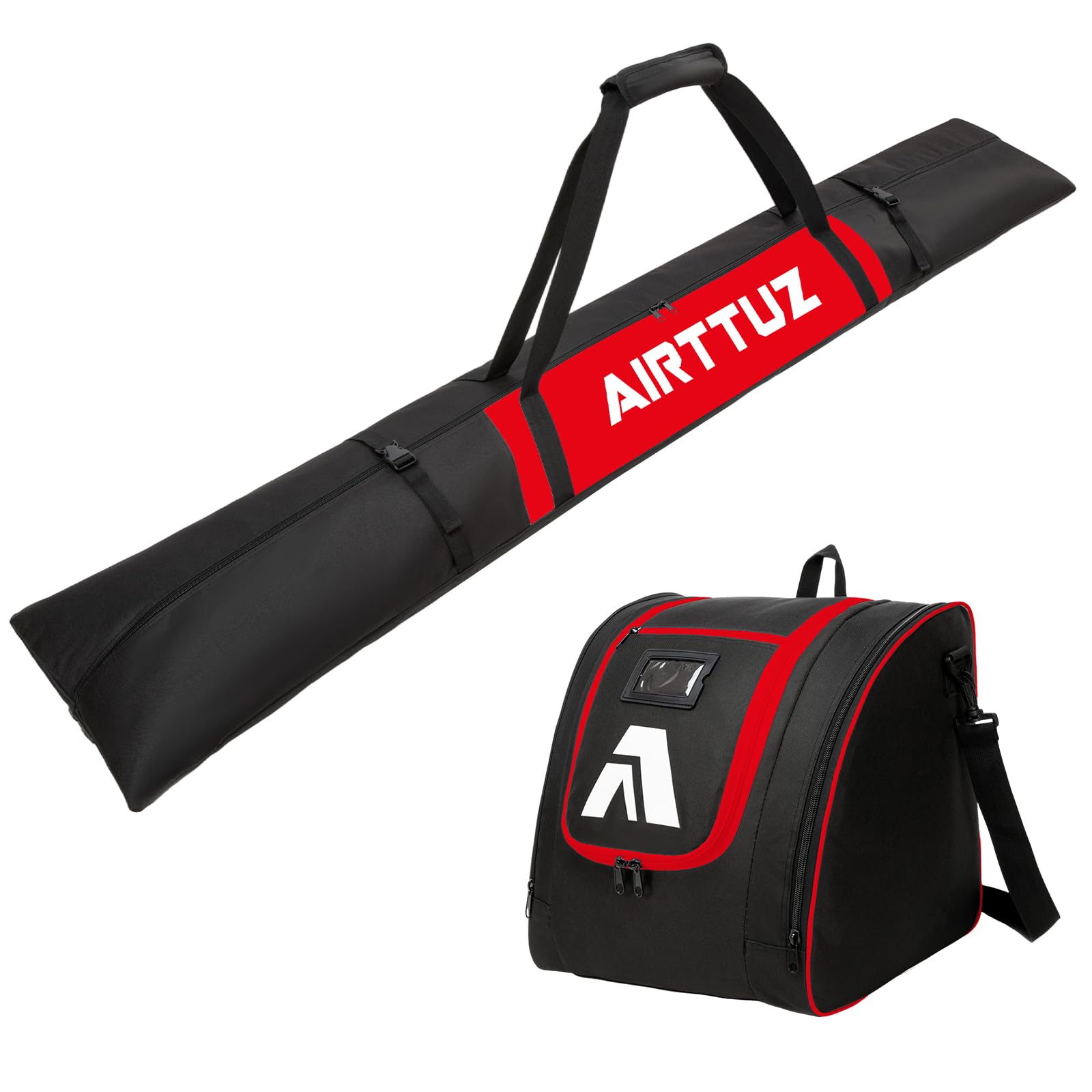
This two-piece ski bag set offers solid protection and plenty of storage space at a reasonable price point for recreational skiers.
Pros
- Both bags feature 5mm foam padding that keeps gear well-protected during travel.
- The boot bag includes extra pockets that easily fit helmets, goggles, and other accessories.
- Water-resistant material held up well when we tested it in wet conditions.
Cons
- The shoulder straps could use more padding for longer carries through airports.
- Zippers feel slightly stiff when fully loaded with heavy gear.
- The black and red color scheme might not appeal to everyone.
The ski bag fit our 190 cm skis with room to spare, and the poles slid right in alongside them. The padding throughout both bags gave us confidence that our gear wouldn’t get dinged up during transport.
The boot bag impressed us with its capacity. We managed to fit our size 12 boots plus a helmet and goggles in the front pocket.
The side compartments worked great for gloves and other small items we needed quick access to. The 600D polyester material feels thick and durable.
When we set the bags down on wet pavement, water beaded up on the surface instead of soaking through. The construction seems solid with reinforced stitching at stress points.
Carrying the boot bag got a bit uncomfortable after walking through the parking lot because the straps dig in when it’s fully packed. The ski bag’s single shoulder strap works fine for short distances but gets awkward for longer hauls.
AUMTISC Ski and Boot Bag Combo
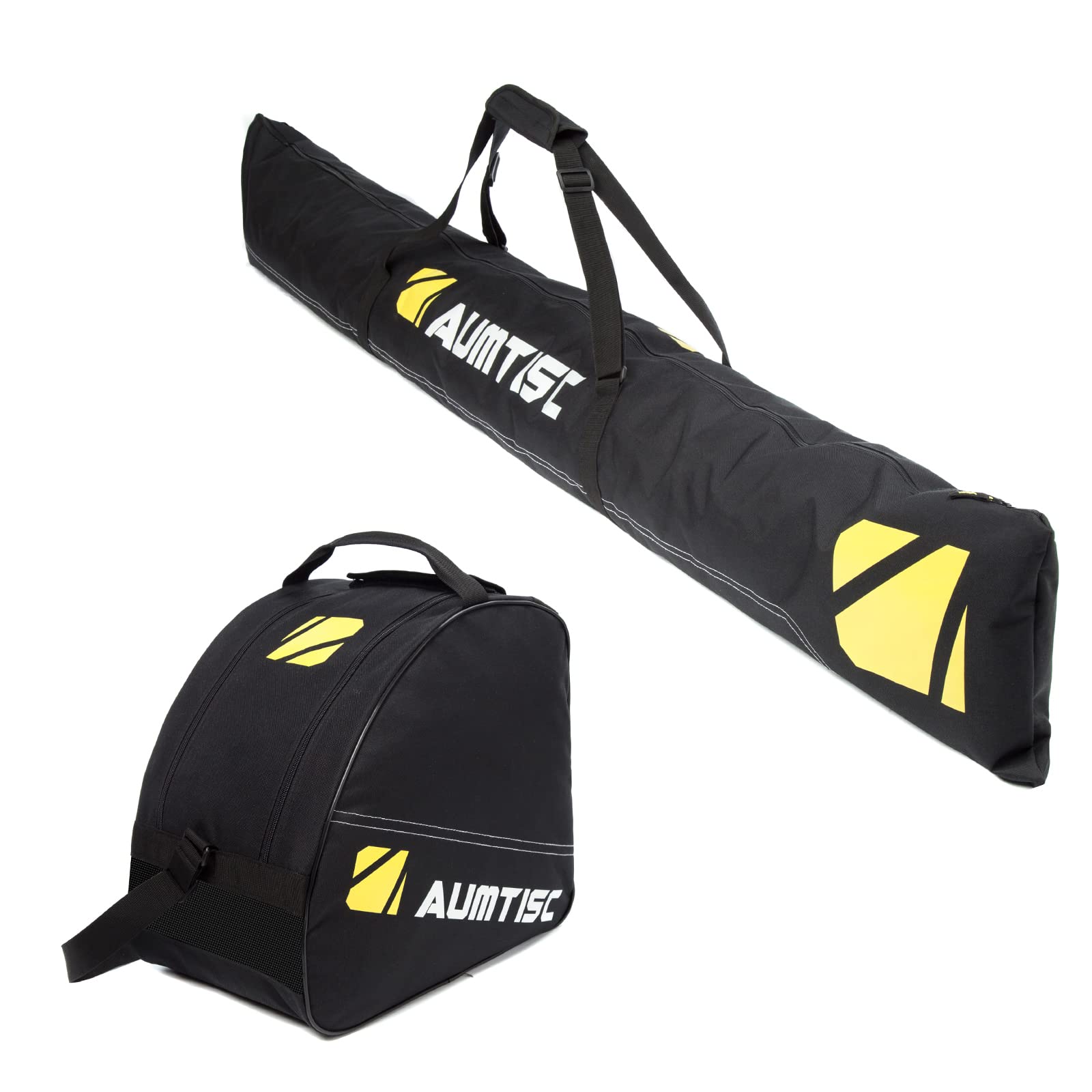
This combo offers solid protection and good value for skiers who need reliable travel bags without spending hundreds of dollars.
Pros
- The 5mm foam padding keeps skis well protected during flights and car trips.
- Adjustable roll-top design lets you customize the ski bag length for shorter skis.
- Boot bag fits more than just boots with room for helmets, gloves, and other gear.
Cons
- Shoulder straps may show wear after a few uses.
- Boot bag fabric feels thinner than the ski bag material.
- Only holds one pair of boots despite the roomy interior.
The thick foam cushioned our skis during the flight, and nothing got damaged or scratched. The water-resistant coating also kept everything dry when we had to carry the bags through snow.
We fit our size 12 boots inside along with a helmet and goggles. The adjustable shoulder straps made carrying everything from the car to the lodge much easier than we expected.
The ski bag’s roll-top feature worked great when we needed to pack 150cm skis by rolling up the extra length. The straps held everything secure without any issues.
The bags held up well on our trip, though we did see some slight wear on one strap after the second use. The zippers worked smoothly and didn’t snag on the fabric.
Unigear Ski Boot Bag Backpack

We found this bag to be an excellent choice for skiers who need reliable storage and easy transport for their gear at a fair price.
Pros
- Holds a surprising amount of equipment including boots up to size 12.5, helmet, goggles, and extra clothing without feeling overstuffed.
- The waterproof bottom and durable fabric kept our gear completely dry even when we set it down in slushy parking lots.
- Padded back panel and straps made carrying heavy boots comfortable enough to walk through airports and lodges.
Cons
- The bag works best for storage and transport rather than backcountry hiking since it gets heavy when fully loaded.
- Three compartments might take some practice to figure out the best way to organize your specific gear.
- At 50 liters, it may be slightly bulky for shorter trips when you don’t need to pack as much.
The 50-liter capacity handled everything we threw at it. Our boots, helmet, goggles, gloves, and extra base layers all fit with room to spare.
The separate boot compartments kept our wet boots away from dry clothes. We appreciated how the back panel flipped down to create a standing mat for changing boots.
This feature worked great in snowy parking lots when we needed to keep our feet dry. The bag survived being tossed around as checked luggage on our flight.
The combo of tarpaulin and nylon held up without any tears or worn spots. The zippers still glide smoothly after several uses.
Carrying the Unigear bag on our back was more comfortable than we expected. The padded straps distributed the weight well.
We could walk from the car to the lodge without the boots digging into our backs. The external straps let us attach our skis to the outside of the bag.
This freed up our hands to carry our kid or grab coffee. Everything stayed secure even when we were moving quickly through crowded areas.
GoHimal Ski Bag and Boot Bag Combo

This combo delivers solid protection and ample storage space for weekend ski trips without breaking the bank.
Pros
- The thick padding kept our skis and gear safe during baggage handling at the airport.
- We fit boots, helmets, and goggles in the boot bag with room to spare.
- The water-resistant material protected our equipment when we set the bags down in slushy snow.
Cons
- The shoulder straps dig into your shoulder when the bags are fully loaded.
- The extra-long design makes the ski bag awkward to maneuver in tight spaces.
- The zippers require some effort to close when packed full.
The boot bag swallowed our size 12 boots plus helmets without any struggle. The front pocket came in handy for storing our goggles and hand warmers.
The ski bag handled our 190cm skis with room left over. We appreciated the internal straps that kept everything secure during transport.
The padding felt substantial enough that we weren’t worried about damage from other luggage. Carrying these bags when fully loaded takes some muscle.
The padded straps help but they’re not as comfortable as higher-end options. We noticed the bags held up well after being tossed around by airline baggage handlers and stuffed into ski lodge storage areas.
The black and white pattern made our bags easy to spot on the luggage carousel. After setting the bags down in wet snow outside the lodge, we found our gear stayed completely dry inside.
The 600D material feels tough and shows no signs of wear after our trip.
Buying Guide
When we shop for a ski boot travel bag, we need to consider several key features that make a real difference during travel.
Size and Capacity
The bag must fit our ski boots comfortably. Most bags are designed to hold one pair of adult boots, but some can accommodate additional items like helmets or gloves.
We should measure our boots before buying to ensure a proper fit. Bags that are too small will squeeze our boots, while oversized bags waste space and add unnecessary weight.
Material and Durability
We want bags made from strong, water-resistant materials. Nylon and polyester are common choices that hold up well against rough handling at airports and in car trunks.
Reinforced stitching at stress points helps the bag last longer. Heavy-duty zippers are important because they get used frequently and need to withstand the weight of our gear.
Portability Features
| Feature | Why It Matters |
|---|---|
| Padded handles | Easier to carry when bag is heavy |
| Shoulder straps | Distributes weight across our body |
| Grab loops | Provides multiple carrying options |
| Wheels | Reduces strain when moving through airports |
Protection and Padding
Internal padding protects our boots from damage during transport. It also prevents the boots from damaging other luggage or items in our vehicle.
Separate compartments keep dirty boots away from clean clothes. Ventilation features help our boots dry out and prevent odor buildup.
Storage Options
Extra pockets are useful for storing boot accessories, insoles, or small items we need quick access to during our trip.
Frequently Asked Questions
What features matter most in a ski boot travel bag for flying?
We prioritize reinforced padding on all sides to protect boots from baggage handlers and other luggage. Hard-shell construction or thick foam panels work best for impact resistance.
Strong zippers and lockable pulls help secure your gear during flights. We also look for water-resistant materials to keep boots dry if bags sit on wet airport floors or get exposed to snow.
External compression straps keep boots from shifting inside the bag. An ID card sleeve makes it easier to identify your bag at baggage claim.
Can a ski boot bag qualify as a carry-on for most airlines?
Most boot-only bags fit within standard carry-on dimensions of 22 x 14 x 9 inches. We’ve successfully brought compact boot bags as carry-ons on major U.S. carriers.
Boot-and-helmet combo bags usually exceed carry-on limits. These larger bags typically need to be checked.
Airlines can require any bag to be checked if overhead bins fill up. We always verify current size restrictions with our specific airline before traveling.
How do boot-and-helmet bags compare to boot-only bags for protection and convenience?
Boot-and-helmet bags save space by combining two items in one bag. They protect both pieces of gear with dedicated compartments that prevent the helmet from getting crushed.
These combo bags weigh more and take up more room than boot-only options. We find them harder to carry through crowded terminals.
Boot-only bags offer better portability and easier storage in tight spaces. They work well if we pack our helmet separately in a ski bag or checked luggage.
What size ski boot bag should I choose for alpine boots, liners, and accessories?
We measure our boots in their full size with liners installed to determine bag capacity. Most adult alpine boots need bags rated for sizes 12-13 or larger to fit comfortably.
A bag with 40-50 liters of volume accommodates boots plus extra room for gloves, goggles, and small accessories. We avoid bags that barely fit our boots because forcing zippers closed damages both the bag and our gear.
Some bags list mondo point sizing instead of U.S. shoe sizes. We check the internal dimensions in inches or centimeters to confirm our boots will fit.
Are backpack-style ski boot bags more comfortable for long walks through airports and parking lots?
Backpack straps distribute weight across both shoulders instead of one. We find this design reduces fatigue when walking long distances from parking areas or between terminals.
Padded shoulder straps and a chest clip improve comfort with heavy boots. We prefer bags with adjustable straps that fit different body sizes.
Tote-style bags with single handles or shoulder straps put more strain on one side of the body. These work fine for short carries but become uncomfortable after 10-15 minutes of walking.
How can I keep ski boots dry and odor-free inside a travel bag during multi-day trips?
We remove liners from boot shells after each ski day and let both pieces air out separately overnight.
Boot dryers or newspaper stuffed inside shells absorb excess moisture.
We leave the bag partially unzipped in our hotel room to allow airflow.
Odor-absorbing pouches with activated charcoal reduce smell buildup during trips.
We also pack a small microfiber towel to wipe down wet shells before putting them back in the bag.