
Best DJ Cable Bags for Organized Audio Equipment Storage in 2026
DJs invest heavily in quality cables for their equipment. These cables connect turntables, mixers, controllers, and speakers to create seamless performances.
Without proper protection, expensive cables can tangle, fray, or break during transport between gigs. A dedicated DJ cable bag keeps your cables organized and protected.
These bags prevent tangles that waste time during setup and teardown. They also shield cables from damage caused by crushing, moisture, and rough handling.
Most DJ cable bags include compartments or pouches that separate different cable types. This makes it easy to grab exactly what you need when setting up.
The main things to consider when buying a DJ cable bag are size, compartment layout, and material durability. You need enough space for all your cables without excess bulk.
The compartments should match how you organize your gear, whether that’s by cable type or by function. Weather-resistant materials protect against spills and humidity that can damage cable connections.
Best DJ Cable Bags
We tested and reviewed the top DJ cable bags to help you find the right one for your gear. Our list includes options for different budgets and storage needs.
Wigojoy Large DJ Cable Bag

This bag offers exceptional organization and durability for DJs who need to transport cables and equipment without hassle.
Pros
- The dividers let you customize the interior layout to fit your specific gear needs
- Bright zippers and lining make finding items in dark venues much easier
- Water-resistant nylon construction protects your equipment from spills and weather
Cons
- The laptop compartment runs smaller than expected for larger computers
- The bag’s size might be overwhelming if you only carry basic gear
- It takes some time to figure out the best way to arrange all the compartments
We packed this bag for a recent gig and found it held far more than we anticipated. The fixed divisions at the bottom kept our heavier cables from shifting around during transport.
The removable dividers let us create custom spaces for different cable types. The bright blue interior lining was a pleasant surprise when we opened the bag in a dimly lit venue.
We didn’t have to dig around blindly to find the right cable. The zippers felt sturdy and moved smoothly even when the bag was fully loaded.
Carrying options work well for different situations. We used the padded shoulder strap when walking longer distances and switched to the top handles for quick moves between the car and venue.
The luggage strap on the back let us slide it onto our rolling case at the airport. The laptop pocket fits most standard-sized computers but struggled with our 17-inch model.
We ended up using that space for a tablet and some paperwork instead. All the external pockets came in handy for storing adapters, picks, and other small items we needed quick access to during setup.
Wigojoy Large DJ Cable Bag
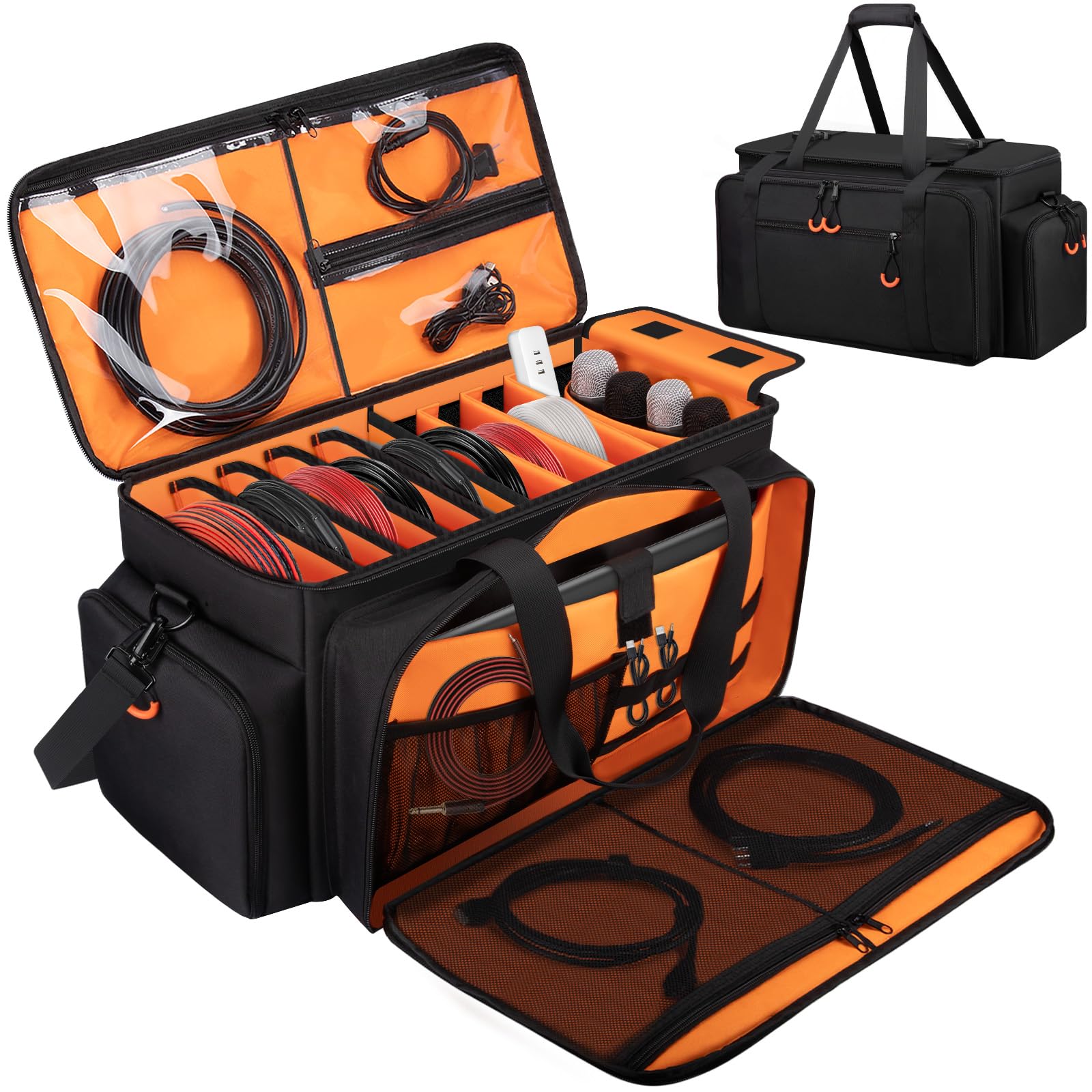
This bag delivers excellent organization and protection for DJ gear at a reasonable price point.
Pros
- The 16 compartments keep cables and equipment neatly separated and easy to find
- Bright orange color and reflective zippers help locate items in dark venues
- Water-resistant nylon construction feels thick and protective
Cons
- The laptop compartment runs smaller than expected for modern laptops
- The bag’s large size might be overkill for DJs with minimal gear
- Orange color won’t appeal to everyone’s taste
We tested this bag at multiple gigs and immediately noticed how much gear it holds. The fixed divisions with sealed bottoms kept our cables from tangling together.
We also appreciated the removable dividers that let us customize the storage layout based on what we needed to bring. The bright orange exterior stands out in crowded backstage areas.
We found our bag quickly among other equipment cases. The reflective zippers made a real difference when we needed to grab something during a set in low lighting.
Carrying this bag felt comfortable even when fully loaded. We switched between the padded handles and the adjustable shoulder strap depending on how far we needed to walk.
The luggage strap on the back worked well for sliding the bag onto a rolling suitcase handle during travel. Our main complaint involves the laptop pocket.
It fits smaller laptops fine, but we struggled with anything over 15 inches. The rest of the storage space works great though.
We fit our mixer, four microphones, basic lighting equipment, and plenty of cables without cramming anything in. The water-resistant material protected our gear during a light drizzle between our car and the venue.
The thick nylon feels durable enough to handle regular use. After several weeks of testing, the zippers still glide smoothly and the stitching shows no signs of wear.
Trunab DJ Cable File Bag

This bag offers excellent value with its customizable storage system and protective design that keeps all your cables and equipment organized and safe.
Pros
- The bright orange interior lining makes finding gear in dark venues quick and easy
- Removable dividers let you create custom compartments that fit your exact setup
- Multiple pockets and storage areas keep small accessories separated and accessible
Cons
- The bag may feel bulky when fully loaded with heavy equipment
- Durability concerns with the zippers after extended heavy use
- Takes time to figure out the best divider configuration for your needs
We found this cable bag to be a solid choice for managing DJ gear and accessories. The orange lining really does help when you’re setting up in dimly lit spaces.
You can spot what you need right away without digging around. The divider system works well once you get it set up how you want it.
We created different sized compartments for various cable types and equipment. It took some trial and error to find the right arrangement, but now everything has its place.
The outer pockets proved useful for quick-access items. We kept adapters and small tools in the front slots where we could grab them fast.
The shoulder strap makes carrying the bag comfortable even when it’s packed full. Build quality seems good for the price point.
The nylon material and foam padding protect cables from getting tangled or damaged. We’ve used it for multiple events and the bag held up well under regular transport conditions.
Trunab DJ Cable File Bag

This bag works well for organizing DJ cables and gear with its smart layout and good build quality, though the zippers could be better placed.
Pros
- The divider system lets you set up the inside however you want
- Plenty of pockets keep small items and accessories separated
- The bright interior makes finding cables easy even in dark venues
Cons
- Some dividers don’t stay fastened as securely as the sewn-in ones
- The inside lid zippers open downward instead of upward
- The bag can start folding in half after about a year of regular use
We found this bag holds way more than we expected when we first opened it. The mix of fixed and removable dividers made it simple to create sections for different cable lengths.
Our 6-inch patch cables fit in narrow spots while the 50-foot XLR cables got their own wider sections. The padding on the bottom comes out if you need more space.
We kept it in most of the time since it protects our gear and keeps the bag standing upright. The bright colored interior really helped us grab the right cable quickly during setup at dimly lit gigs.
Carrying this bag around felt comfortable thanks to the padded handles. The shoulder strap clips on when we need to haul it longer distances.
We used the trolley strap to attach it to our rolling case, which saved our backs between the car and the venue. The outside pockets worked great for storing our earplugs, adapters, and small connectors.
Two mesh pockets inside the top flap held our backup batteries and USB drives. Everything stayed organized and easy to find.
We noticed the zippers on the inside lid open the wrong way. When the bag sits open, the pockets hang down and items can fall out.
This got annoying during quick setup changes. The removable dividers also shift around more than we’d like when the bag gets moved.
The build quality held up well through dozens of gigs. The stitching looked solid and the fabric felt thick enough to handle regular use.
Our bag showed some wear after many months, but it still does the job.
SNIGJAT DJ Cable Bag
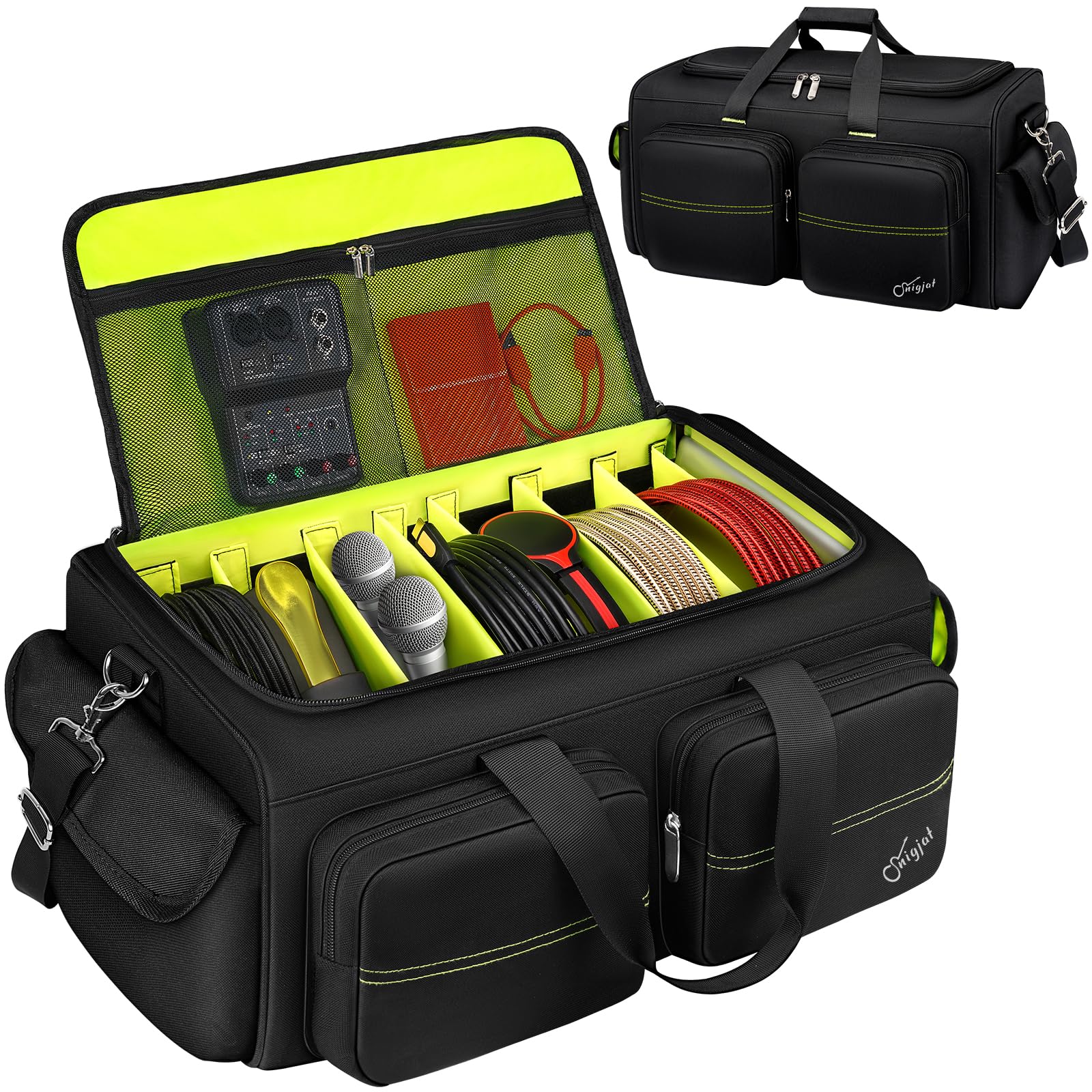
This bag offers excellent organization and protection for your cables and gear at a reasonable price point.
Pros
- The bright green interior and customizable dividers make finding and organizing equipment quick and easy
- Strong construction with water-resistant fabric and thick padding keeps gear safe during transport
- Multiple carrying options including shoulder strap and luggage attachment provide flexibility
Cons
- The size might be too large if you only have a small cable collection
- Not ideal for extremely delicate equipment that needs hard-shell protection
- The green color isn’t for everyone who prefers a more professional look
We found the SNIGJAT DJ Cable Bag to be surprisingly roomy for its price. The bag easily swallowed all our cables, microphones, and small accessories without feeling stuffed.
The removable bottom and adjustable dividers really stand out. We rearranged the compartments several times to fit different setups, which worked perfectly for changing gig requirements.
The bright green interior initially seemed odd, but it actually helped us spot black cables quickly in low-light venues. Build quality impressed us during regular use.
The zippers glide smoothly even when the bag is packed full. We appreciate the rubberized bottom since we often set the bag down on concrete floors and outdoor surfaces.
The six different pockets keep everything separated. Front pockets held our heavier items like power cables, while the mesh pockets inside kept smaller accessories from getting lost.
The side pockets with hook-and-loop closures gave us quick access to frequently used items. Carrying options make this bag practical for different situations.
We used the shoulder strap when walking longer distances and the top handle for quick grabs. The luggage strap attachment proved useful at airports when traveling to out-of-town gigs.
Buying Guide
When we shop for DJ cable bags, we need to think about what matters most for protecting and organizing our gear. The right bag keeps cables untangled and safe during transport.
Size and Capacity
We should first consider how many cables we typically carry. A bag that’s too small won’t fit everything.
An oversized option wastes space in our setup. Count your cables and measure their lengths before buying.
Most bags list their dimensions and how many cables they hold.
Material and Durability
The material affects how well the bag protects our cables. We want something that can handle regular use and occasional bumps.
| Material Type | Benefits | Drawbacks |
|---|---|---|
| Nylon | Lightweight, water-resistant | Can tear with sharp objects |
| Canvas | Durable, heavy-duty | Heavier to carry |
| Polyester | Affordable, easy to clean | Less protective than canvas |
Organization Features
We need to look at how the bag keeps cables separated. Interior dividers or multiple compartments prevent tangling and make it easy to grab what we need quickly.
Pockets for small items like adapters are helpful too.
Portability
Consider how we’ll carry the bag. Handles work for short distances, while shoulder straps make longer trips easier.
Some bags offer both options.
Budget Considerations
We can find cable bags at different price points. More expensive options often use better materials and offer more features.
Affordable bags can work well for basic needs.
Frequently Asked Questions
What features should I look for in a cable bag to keep audio, power, and USB leads separated and protected?
Padded dividers let us create separate compartments for different cable types. This prevents XLR, RCA, and power cables from tangling together during transport.
Look for bags with mesh pockets or elastic loops on the interior walls. These hold USB cables and small adapters in fixed positions where we can see them quickly.
Rigid or semi-rigid construction protects cable ends and connectors from getting crushed. A bag with at least 10mm of padding on all sides prevents damage when we stack gear or toss the bag in a vehicle.
Which materials and construction details matter most for durability in frequent gig transport?
We need 600D or higher denier nylon for the outer shell. This thickness resists tears and abrasion from repeated loading and unloading.
Reinforced stitching at stress points matters more than most realize. Double or triple stitching on handles and zipper edges prevents the bag from falling apart after months of use.
Water-resistant coating keeps cables dry during brief exposure to rain or spills. YKK zippers last longer than generic brands and won’t separate under tension when the bag is fully packed.
How much capacity do I need to carry typical DJ cables, adapters, and small accessories without overpacking?
Most mobile DJ setups require 15-20 liters of space. This holds roughly 10-12 cables of various lengths plus adapters and a small tools kit.
A bag measuring around 16 x 10 x 8 inches fits standard XLR pairs, RCA cables, power cords, and a laptop charger. We can add USB cables and adapters in exterior pockets without cramming everything into one main compartment.
Overpacking reduces organization and makes cables harder to access. If we need to force zippers closed, the bag is too small for our actual needs.
Are wheeled cable bags worth it for mobile DJs, and what are the key trade-offs versus a backpack style?
Wheeled bags make sense when we regularly transport more than 20 pounds of cables and accessories. They reduce shoulder and back strain during long walks from parking areas to venues.
The main drawback is navigating stairs and uneven surfaces. Wheels add 2-3 pounds of weight and take up space that could hold more cables.
Backpack-style bags offer better mobility in tight spaces and crowded venues. We can keep both hands free while carrying other gear, which matters when making multiple trips from the car.
What interior layout works best for fast setup and teardown, including labeled compartments and removable dividers?
Clamshell-style openings let us see everything at once without digging through layers. This design cuts setup time because we can grab exactly what we need in one motion.
Removable hook-and-loop dividers let us adjust compartment sizes as our cable collection changes. We can create wide sections for bulky power supplies and narrow slots for individual USB cables.
Clear plastic pockets or label holders help us mark sections for specific cable types. After a few gigs, muscle memory takes over and we reach for the right compartment without looking.
How do I choose the right size and carry format to pair with my main gig bag and controller case?
Measure the total volume of all bags we typically transport. The cable bag should be roughly 20-30% of our main controller case size to maintain balance when carrying both.
If we use a rolling controller case, a backpack-style cable bag pairs well. We can wheel one item and wear the other.
This combination works better than trying to stack two wheeled bags.
Consider how everything fits in our vehicle. A cable bag that’s 4-6 inches narrower than our controller case can nestle beside it or stack on top without wasting trunk space.