Best Compression Socks for Long Flights to Improve Comfort and Circulation
Long flights can leave your legs feeling stiff, swollen, and uncomfortable. Compression socks help improve blood circulation, reduce swelling, and lower the risk of deep vein thrombosis during extended periods of sitting. They apply gentle, graduated pressure to your legs, which supports healthy blood flow and can make long travel days more comfortable.
When choosing compression socks for flights, you should pay attention to compression level, material, and fit. The right pair should balance effective pressure with comfort, so you can wear them for hours without irritation. Materials like nylon blends offer durability and breathability, while proper sizing ensures consistent compression without being too tight.
We researched and tested a range of options to find compression socks that are comfortable, supportive, and practical for travel. These picks can help you stay comfortable in the air and ready to move when you land.
Best Compression Socks for Long Flights
If you want to improve circulation and reduce leg fatigue during air travel, compression socks can help. The options below offer reliable support, comfortable materials, and travel-friendly designs to keep your legs feeling better on long flights.
PhysFlex Compression Socks
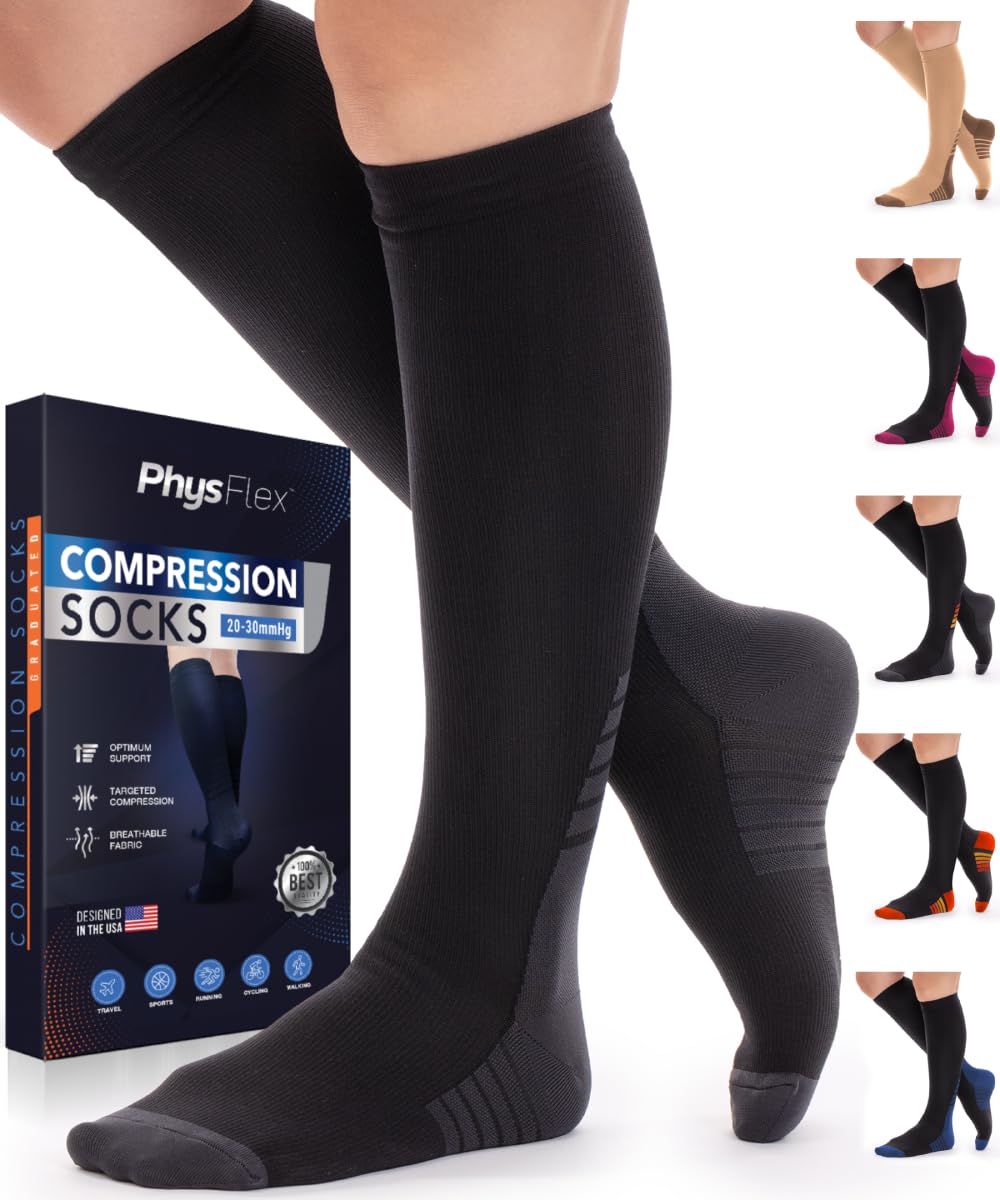
A solid choice if you want reliable compression socks that keep your legs comfortable and supported during long flights.
Pros
- Helps reduce swelling and leg fatigue noticeably
- Breathable fabric keeps feet dry during travel
- Stays snug without slipping down
Cons
- Can be tricky to put on at first
- Length may feel too tall for shorter legs
- Compression can feel uneven between pairs
Wearing these on a long-haul flight feels like giving your legs a quiet layer of support the whole way. You’ll notice less swelling when you land, which makes walking off the plane far more comfortable. The snug fit stays in place even when you shift around in your seat.
The material feels breathable enough to avoid overheating, even in warmer cabins. Moisture-wicking fabric keeps your feet dry, so you won’t have to deal with that damp, uncomfortable feeling after hours of sitting. They also hold their shape well after washing, which is important if you plan to use them often.
You might find the socks a little challenging to pull on, especially if you’re not used to compression wear. Once they’re in place, though, the fit feels secure without being restrictive. If you’re looking for dependable compression socks for travel, these are a practical and comfortable option.
CHARMKING Compression Socks

A solid choice if you want comfortable, supportive compression socks that hold up well during long flights without feeling overly tight.
Pros
- Comfortable fit for extended wear
- Breathable fabric keeps legs cool
- Durable material that withstands repeated washing
Cons
- Sizing can be tricky between ranges
- Toe area may feel roomy for narrow feet
- Compression level is moderate, not firm
These socks feel supportive without cutting off circulation, which makes them ideal for long flights. You can wear them for hours without the itchy or stiff feeling that some compression socks cause. The fabric stretches evenly, so you don’t get awkward pressure points.
You’ll notice the material is both soft and strong. Even after several washes, the elasticity stays intact. The breathable weave helps prevent overheating, which is especially useful in warm cabins.
If you have wide feet or use toe separators, the roomy toe box works in your favor. However, if you prefer a snug toe fit, you may find it a little loose. For the best fit, pay close attention to the size chart and consider sizing down if you’re between sizes.
Would you like me to write the next section for another product so the roundup feels complete?
Physix Gear Compression Socks

A solid choice if you want dependable compression socks that keep your legs comfortable and supported during long flights.
Pros
- Firm, consistent compression that reduces swelling
- Comfortable fit for extended wear without cutting off circulation
- Durable fabric that holds up after repeated washes
Cons
- Can be tricky to put on if you’re not used to compression gear
- Slightly higher price than basic alternatives
- Limited color options in some sizes
These socks feel snug from the moment you pull them on, giving you steady support through your calves and feet. On a recent long-haul flight, they kept my legs from feeling heavy or swollen, even after hours of sitting. The compression is firm but not restrictive, so you can still move comfortably.
The fabric feels strong and smooth, with no loose threads or weak seams after multiple wears. You’ll notice they stay in place without slipping, which is a big plus when you’re traveling and can’t adjust them constantly. They also dry quickly after washing, making them easy to pack for trips.
They do require a bit of effort to put on, especially if you’re new to compression socks. However, once in place, you can wear them for hours without discomfort. If you value performance and durability over budget pricing, these are worth adding to your travel gear.
Would you like me to write the rest of the roundup for the other products in the same style?
FITRELL Compression Socks

If you want reliable compression socks for long flights that balance comfort, support, and durability, these are a strong choice.
Pros
- Comfortable fit with consistent compression
- Breathable fabric keeps legs cool during travel
- Holds shape well after multiple washes
Cons
- Sizing runs slightly small
- Can feel snug when first putting on
- Limited color options in some sizes
These socks feel supportive without being restrictive, which is important when you’re sitting for hours on a plane. The compression is firm enough to reduce swelling but not so tight that you need to struggle to wear them for extended periods.
The fabric breathes well, so your legs stay cooler than with many thicker compression options. Even after wearing them on a long-haul flight, they stayed dry and didn’t cause irritation. The cushioned sole also adds comfort when walking through airports.
After several washes, the elasticity remains intact and the socks still fit as they did on day one. Just be mindful of the sizing, as going up a size can make them easier to put on if you’re between measurements. For travel, healthcare work, or recovery, they deliver dependable performance without unnecessary bulk.
CHARMKING Compression Socks

A reliable choice if you want consistent compression, comfort, and durability for long flights without spending too much.
Pros
- Comfortable enough for all-day wear
- Stays in place without slipping
- Comes in a large multi-pack for convenience
Cons
- Slightly tighter fit for larger calves
- Fabric can feel warm in hot climates
- Limited style options if you prefer plain designs
You will notice the difference in leg comfort after wearing these on a long flight. The compression feels firm but not restrictive, and they don’t dig into your skin. Putting them on is easier than with many other compression socks I’ve tried.
The material has a smooth texture and stretches evenly, so you won’t feel uneven pressure points. They also stay up without rolling down, which means you won’t need to adjust them mid-flight. Having multiple pairs in the pack makes it simple to rotate them for travel and daily use.
If you tend to get swollen ankles or heavy legs during air travel, these socks can help keep circulation steady. They’re not flashy, but they do the job well and hold up after repeated washes. For the price and performance, they’re a practical option to keep in your travel kit.
Buying Guide
When choosing compression socks for long flights, focus on compression level. Most travelers benefit from socks in the 15–30 mmHg range. Lower levels offer mild support, while higher levels provide firmer pressure.
Material is also important. Look for breathable fabrics like nylon or spandex blends. These help manage moisture and maintain comfort during extended wear.
Pay attention to fit and sizing. A proper fit ensures even compression and prevents discomfort. Always check the manufacturer’s size chart before buying.
You should also consider sock length. Knee-high styles are common for travel, but calf or thigh-high options may suit certain needs.
Here’s a quick reference table:
| Feature | What to Look For | Why It Matters |
|---|---|---|
| Compression Level | 15–30 mmHg | Supports circulation during flights |
| Material | Nylon/spandex blends, breathable fabrics | Comfort and moisture control |
| Fit & Sizing | Based on accurate measurements | Ensures effective compression |
| Length | Knee-high or longer | Coverage for optimal support |
Ease of wear is another factor. Some socks have a reinforced heel and toe for durability and easier application.
If you have circulation issues or medical conditions, consult a healthcare professional before selecting a compression level. This ensures you choose a safe and effective option for your needs.
Frequently Asked Questions
You can use compression socks to help maintain healthy blood flow, reduce swelling, and support your legs during extended periods of sitting on flights. Choosing the right size, compression level, and material ensures they work effectively and remain comfortable for the duration of your trip.
What are the benefits of wearing compression socks during long flights?
Compression socks apply gentle pressure to your legs, which helps blood circulate more efficiently.
They can reduce swelling in your ankles and feet caused by prolonged sitting.
You may also experience less leg fatigue after your flight.
How do you determine the correct size for compression socks for travel?
Measure your calf circumference at its widest point and your ankle just above the bone.
Use the manufacturer’s sizing chart to match your measurements.
A proper fit ensures consistent compression without restricting movement.
Can compression socks reduce the risk of deep vein thrombosis on long flights?
Wearing compression socks can help lower the risk of blood pooling in your legs.
Improved circulation may reduce the chance of developing blood clots during long periods of inactivity.
They are not a substitute for medical advice if you have a history of clotting disorders.
What is the recommended compression level for socks when flying?
For most travelers, 15–20 mmHg graduated compression is suitable for long flights.
If you have medical conditions or higher risk factors, your doctor may recommend a higher level.
Avoid using high-compression socks without professional guidance.
How should compression socks be worn effectively on long-haul flights?
Put them on before boarding, ideally in the morning or after resting with your legs elevated.
Ensure the fabric lies flat without folds or bunching.
Wear them for the entire flight and remove them once you can move freely.
Are there any specific materials or brands of compression socks recommended for air travel?
Look for breathable, moisture-wicking fabrics like nylon blends or merino wool to maintain comfort.
Some travelers prefer brands such as Sockwell, CEP, or Travelsox for their fit and durability.
Choose a style that balances compression, comfort, and ease of wear.