
Best Compression Bags for Luggage Packing to Maximize Your Travel Space in 2025
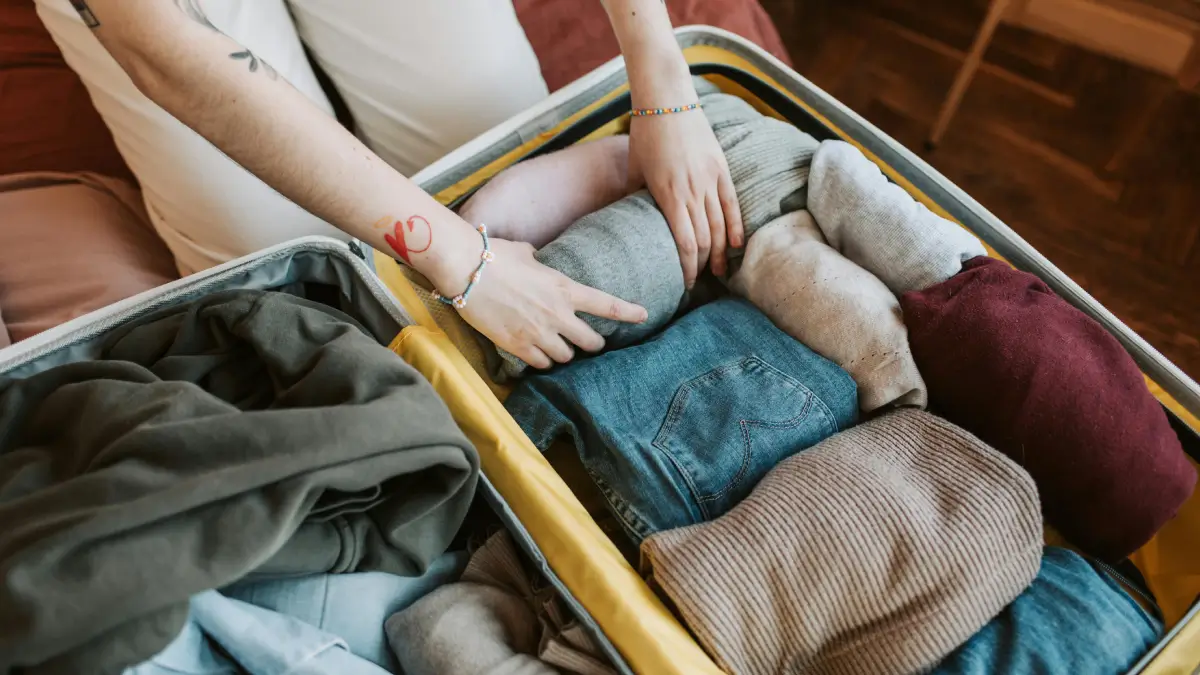
Compression bags transform how efficiently you can pack luggage by removing excess air from your clothes and soft items. These specialized storage bags use vacuum sealing or manual compression to reduce the volume of your belongings by up to 75 percent. Whether you’re packing for a weekend getaway or a month-long trip, compression bags help you fit more items in your suitcase while keeping everything organized.
The primary benefit of compression bags is maximizing your luggage space without exceeding weight limits. They work particularly well for bulky items like sweaters, jackets, and winter clothing that take up significant room when packed normally. Many travelers also appreciate how compression bags separate clean clothes from dirty ones and protect garments from spills or moisture during transit.
When choosing compression bags, consider the closure method, material durability, and size variety. Manual compression bags use zip-lock style seals or roll-up designs, while vacuum bags require a pump or vacuum cleaner to remove air. The bag material should be thick enough to prevent tears but flexible enough to compress fully. Size options should match your packing needs, from small bags for undergarments to large ones for coats and blankets.
We researched and tested twelve different compression bag sets to identify the ones that offer the best combination of durability, compression efficiency, and ease of use.
Best Compression Bags for Luggage Packing
Below is our full list of the best compression bags for luggage packing. These bags help you maximize suitcase space and keep your clothes organized during travel.
VMstr 12-Pack Vacuum Storage Bags
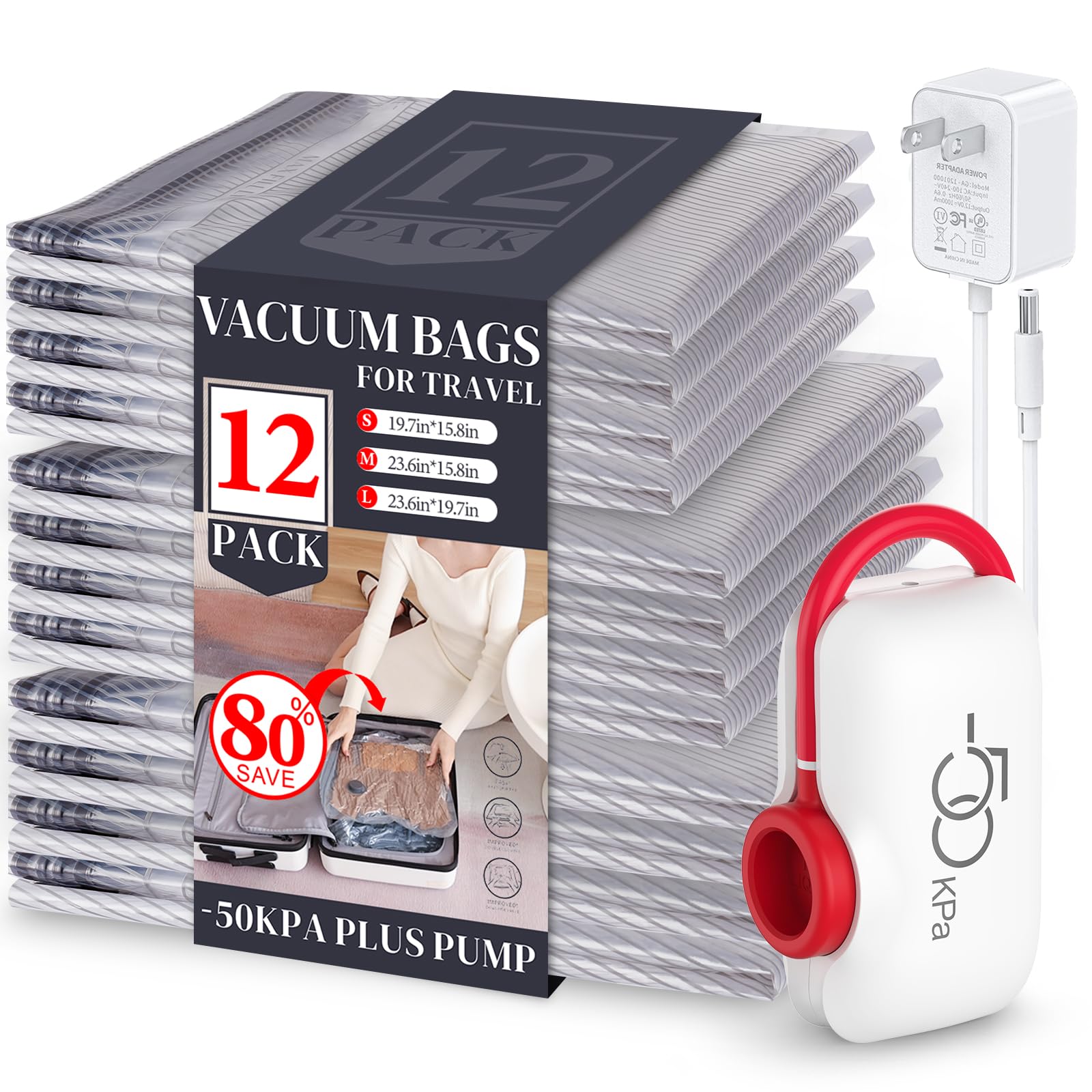
This complete compression system delivers exceptional space savings for travelers who need to pack efficiently without sacrificing organization.
Pros
- Electric pump operates quietly and provides hands-free compression with strong suction
- Twelve bags in three different sizes accommodate various clothing types and luggage configurations
- Semi-transparent material allows you to identify contents while maintaining durability
Cons
- Compression process takes longer than expected, requiring patience during packing
- Individual bag capacity feels smaller than anticipated for bulky items
- Setup complexity increases compared to basic manual compression bags
The electric pump transforms your packing routine with its whisper-quiet operation and impressive suction power. You’ll appreciate how the silicone attachment stays securely connected to each bag’s valve, letting you focus on other tasks while compression happens automatically.
Each bag compresses clothing down to roughly 20% of its original volume, freeing up substantial luggage space. The three size options work perfectly for different items – small bags handle underwear and socks, medium bags accommodate t-shirts and pants, while large bags compress bulky sweaters and jackets.
The PA+PE material construction feels substantial in your hands and shows no signs of tearing even when packed tightly in luggage. You can see your packed items through the semi-transparent design, eliminating guesswork when searching for specific clothing during your trip.
The compression process requires more time investment than you might expect initially. Running the pump for 30-60 seconds per bag adds up when you’re processing multiple bags, though the thorough compression justifies the wait time.
HIBAG Travel Compression Bags 12-Pack

These compression bags deliver excellent space savings and organization for travelers who want to maximize their luggage capacity without using a vacuum pump.
Pros
- Dual-zipper system with color-coded lines makes sealing foolproof and reopening simple
- Generous 12-bag set provides multiple size options for different clothing types
- No vacuum required – just roll out air manually for up to 80% space reduction
Cons
- Some bags may lose effectiveness after multiple uses
- Rolling technique requires practice to achieve maximum compression
- Clear material shows contents but offers no privacy for personal items
The dual-zipper design with yellow and blue guidelines proved incredibly helpful during my recent trip. You can easily see when the bag is properly sealed, eliminating guesswork that often leads to air leaks.
Rolling the air out takes some technique, but once you get the hang of it, the space savings are impressive. I managed to fit a week’s worth of clothes into half the space they normally occupied. The medium bags work perfectly for undergarments and accessories, while the large ones handle bulkier items like sweaters and jeans.
After several trips, I noticed some bags didn’t compress as effectively as when they were new. The material remains durable, but the sealing performance can decline with repeated use. Despite this limitation, the value remains strong considering you get twelve bags at this price point.
The clear material makes organization easy since you can instantly identify contents. However, this transparency means anyone handling your luggage can see what’s inside each bag.
ALMING No-Vacuum Compression Bags

You should buy these compression bags if you want reliable space savings without carrying extra equipment, though you’ll need patience for the rolling technique.
Pros
- Roll-compression system works without any vacuum pump or extra devices
- Durable PA+PE material withstands multiple packing and unpacking cycles
- Twelve bags in two sizes give you flexibility for different clothing items
Cons
- Rolling technique requires practice to achieve maximum compression
- Cannot remove 100% of air like electric vacuum systems
- Zippers occasionally stick when overpacked with thick items
The rolling compression system surprised me with how well it actually works. You place your clothes inside, seal the double zipper, then roll from the sealed end toward the one-way valve. Air pushes out through the bottom vent as you roll, creating decent compression without any equipment.
During my last trip, I managed to fit a week’s worth of clothes into just two large bags. The medium bags worked perfectly for lighter items like t-shirts and undergarments. Heavy sweaters and jeans needed the larger size to compress properly.
These bags held their compression throughout my entire journey. The double-zip seal stayed tight even after being tossed around in overhead bins. When I needed to repack mid-trip, the bags compressed again without any issues.
The learning curve frustrated me initially. Your first few attempts might not achieve great compression if you don’t roll systematically. Once you get the technique down, these bags become genuinely useful travel tools that don’t require carrying bulky vacuum pumps.
BAGAIL Compression Packing Cubes

These compression cubes deliver excellent organization and space-saving capabilities with sturdy construction that handles frequent travel.
Pros
- Dual-zipper compression system effectively reduces packed volume by nearly half
- Durable 320D fabric withstands heavy stuffing without tearing or losing shape
- Six different sizes accommodate everything from underwear to bulky sweaters
Cons
- Heavier than basic packing cubes due to reinforced materials and compression zippers
- Extra zipper occasionally catches fabric if you don’t follow the finger technique
- Compression takes more effort than simply stuffing clothes into regular cubes
The compression mechanism works better than expected once you get the hang of it. You pack your clothes normally, zip the main compartment, then use the outer zipper to squeeze everything down. Following their suggested finger placement prevents zipper snags.
Build quality impresses with thick fabric that doesn’t stretch out after multiple compressions. The water-repellent coating actually works – I spilled coffee on one cube and it beaded right off without staining my clothes inside.
Organization becomes effortless with the variety of sizes included. You can dedicate specific cubes for different clothing types, making unpacking at your destination quick and systematic. The half-mesh design lets you identify contents without opening every cube.
Compression performance varies by clothing type. Soft items like t-shirts and pajamas compress dramatically, while structured clothing like jeans shows less dramatic space savings. Even minimal compression helps maintain neat organization in your luggage.
OlarHike 10-Piece Compression Cube Set

You should purchase this compression cube set if you need a comprehensive packing solution that prioritizes organization over maximum space compression.
Pros
- Complete 10-piece system includes everything from packing cubes to toiletry and shoe bags
- Durable construction withstands frequent travel without tearing or zipper failures
- Clear mesh panels let you identify contents without opening each cube
Cons
- Compression feature provides modest space savings rather than dramatic reduction
- 1.9-pound weight adds noticeable bulk to your luggage before packing
- Rectangular shape doesn’t fit optimally in rounded or uniquely shaped suitcase corners
Testing this set during a week-long trip revealed its strength lies in organization rather than space-saving magic. The four different cube sizes accommodate everything from heavy sweaters to lightweight undergarments perfectly.
Your packing routine transforms with the mesh visibility feature. Finding specific items becomes effortless when you can see folded clothes through the transparent panels without unzipping multiple cubes.
The compression mechanism works through a dual-zipper system that squeezes air out effectively. While you won’t achieve vacuum-sealed compression, the space reduction helps fit an extra outfit or two in tight luggage situations. The polyester material feels sturdy and handled multiple packing sessions without showing wear signs.
Buying Guide
Material Quality
Look for compression bags made from ripstop nylon or polyester. These materials resist tears and punctures during travel.
Check the thickness, measured in denier. Higher denier numbers indicate stronger fabric that withstands repeated use.
Zipper Durability
Choose bags with double zippers for better compression and reliability. YKK or similar quality zippers last longer than generic alternatives.
Test the zipper smoothness before purchasing. Sticky or rough zippers often fail when fully loaded.
Size Options
Consider your typical packing needs when selecting sizes. Most travelers benefit from a variety pack with small, medium, and large options.
Measure your luggage compartments first. Compression bags should fit comfortably inside your suitcase or backpack.
Compression Method
| Type | Best For | Pros | Cons |
|---|---|---|---|
| Roll-up | Clothing, soft items | Simple operation | Limited compression |
| Zip compression | All items | Maximum space saving | More complex |
| Vacuum bags | Bulky items | Highest compression ratio | Requires vacuum source |
Closure System
Roll-top closures work well for quick access items. They compress easily but offer less security than zippers.
Zip closures provide better organization and prevent items from falling out during travel.
Weight Considerations
Lightweight bags add minimal weight to your luggage. Avoid heavy materials that reduce your packing capacity.
Compare the bag weight to compression ratio. The best bags offer maximum compression with minimum added weight.
Frequently Asked Questions
Compression bags offer significant space-saving advantages through vacuum sealing or manual compression methods. Understanding their mechanics, durability factors, and compatibility with different items helps maximize their effectiveness for travel packing.
What are the differences between compression bags and packing cubes, and which is more effective for saving space?
Compression bags remove air through vacuum sealing or manual compression, reducing volume by 50-75%. Packing cubes organize items without removing air, providing minimal space savings of 10-15%.
Compression bags excel for bulky items like jackets, sweaters, and bedding. Packing cubes work better for delicate fabrics, business attire, and items you need frequent access to during travel.
For maximum space efficiency, compression bags deliver superior results. However, packing cubes offer better organization and easier access to your belongings throughout your trip.
How do compression bags work, and do you need a vacuum to use them efficiently?
Manual compression bags use one-way valves that allow air to escape when you roll or press the bag. You compress the contents by rolling from the bottom up, forcing air through the valve.
Vacuum-sealed bags require a pump or vacuum cleaner to remove air completely. These achieve greater compression ratios but need additional equipment.
Travel-sized hand pumps work effectively for vacuum bags without requiring electrical outlets. Rolling compression bags offer convenience without any tools, though they achieve slightly less compression than vacuum methods.
What should be considered when choosing compression bags for travel to ensure durability and effectiveness?
Material thickness determines durability during frequent handling and airline baggage treatment. Look for bags made from 0.3mm or thicker nylon or polyethylene materials.
Valve quality affects compression effectiveness and prevents air leakage. Double-seal or twist valves provide better air retention than basic slider mechanisms.
Size variety ensures optimal packing efficiency for different item types. Choose sets with small, medium, and large options to accommodate various clothing pieces and accessories.
Can compression bags damage clothes or other sensitive items when used for luggage packing?
Compression bags can create permanent creases in dress shirts, suits, and formal wear. The tight compression flattens fabric fibers and creates wrinkles that may require professional pressing.
Down-filled items like jackets and sleeping bags lose insulation effectiveness when compressed for extended periods. The down clusters become matted and may not regain full loft.
Delicate fabrics including silk, wool, and structured garments can develop permanent creases or lose their shape. Use compression bags primarily for casual clothing, activewear, and non-structured items.
Are there specific compression packing cubes that are recommended for frequent travelers due to their build quality and design?
Eagle Creek Pack-It Specter Tech Compression Cubes feature durable ripstop nylon and reliable YKK zippers. The compression zippers reduce volume by approximately 25-30% without requiring vacuum sealing.
Peak Design Packing Cubes offer weatherproof zippers and reinforced stress points for extended use. Their compression system works through external straps rather than internal vacuum mechanisms.
eBags compression cubes provide affordable durability with double-stitched seams and heavy-duty zippers. They include mesh panels for ventilation and easy content identification.
What are the key features to look for in compression bags to ensure they fit well within various luggage sizes?
Flexible dimensions allow bags to conform to irregular luggage spaces and corners. Soft-sided bags adapt better than rigid compression cubes to maximize space utilization.
Multiple size options ensure efficient packing for different luggage capacities. Small bags work for carry-on restrictions while large sizes suit checked luggage requirements.
Measurement specifications help calculate total compressed volume before packing. Compare compressed dimensions with your luggage interior measurements to ensure proper fit and avoid overpacking issues.