
Best Scuba Gear Bags for Flying with Your Gear in 2026
Traveling with scuba gear requires a bag that can protect your equipment while meeting airline size and weight restrictions. Scuba gear bags designed for flying are built to handle the unique demands of air travel, such as rough handling, limited storage space, and the need to keep gear organized. They often feature reinforced materials, specialized compartments, and lightweight designs to make transport easier.
When choosing a scuba gear bag for flying, you should focus on weight, durability, and ease of transport. A lighter bag helps you stay under airline baggage limits, while strong materials protect your gear from damage. Wheels, padded straps, and well-placed handles can make moving through airports less of a hassle.
Finding the right bag means balancing protection with portability, so your gear arrives safely without exceeding weight limits. We researched and tested a range of scuba gear bags to find the ones that make traveling with your equipment as smooth as possible.
Best Scuba Gear Bags for Flying with Your Gear
Choosing the right scuba gear bag helps you protect your equipment and meet airline travel requirements. Below you’ll find our top picks that balance durability, weight, and storage features for air travel.
Scubapro Sport Mesh ‘N Roll 100

If you want a reliable, easy-to-transport dive bag for air travel and wet gear, this one delivers on both durability and convenience.
Pros
- Mesh design drains water and reduces weight
- Wheels make long walks through airports or docks easier
- Backpack straps give you carrying flexibility
Cons
- Can tip forward when standing upright
- Bulkier than some soft-sided travel bags
- Mesh is lighter than older Scubapro non-wheeled models
This bag feels purpose-built for divers who fly often. You can roll it through the terminal, then switch to backpack mode when navigating docks or sandy paths. The coated mesh keeps the weight manageable while still holding a full set of gear.
After a dive, the mesh sides let water drain so you’re not packing a soggy mess into your rental car or hotel room. The large U-shaped opening makes it easy to load and unload bulky items like fins and a BC without wrestling with the zipper.
In use, the wheels handle rougher terrain better than expected, but the bag doesn’t stay upright on its own. If you’re packing it inside another suitcase for a flight, its structure takes up more space than a collapsible duffel. Still, for most divers, the trade-off is worth it for the convenience and gear protection.
Bulex XXL Mesh Dive Bag

If you need a lightweight, roomy, and practical bag for flying with your scuba gear, this one handles the job without fuss.
Pros
- Holds a full scuba or freediving setup with room to spare
- Mesh design helps gear dry and sheds sand easily
- Lightweight yet strong enough for heavy loads
Cons
- Long length can make carrying awkward
- Minimal structure means it doesn’t stand upright
- Mesh material offers little protection from impacts
The Bulex XXL Mesh Dive Bag makes travel with bulky dive gear straightforward. You can pack long fins, BCD, wetsuit, and even a regulator without feeling cramped. The mesh construction keeps wet gear from smelling and lets sand fall away before you get to your car or hotel room.
On a recent trip, it swallowed two full sets of gear for air travel without feeling overloaded. The side zipper pockets came in handy for stashing smaller essentials like defog, gloves, or spare straps. Its light weight meant you could load it up without worrying about airline weight limits.
However, the bag’s size can be a double-edged sword. Fully packed, it can feel a bit unwieldy to carry through crowded airports, and the lack of padding means you’ll want to pack delicate items in protective cases inside. If your priority is capacity and ventilation over structure, this bag is a solid choice for dive travel.
Scubapro Sport 105 Dive Bag
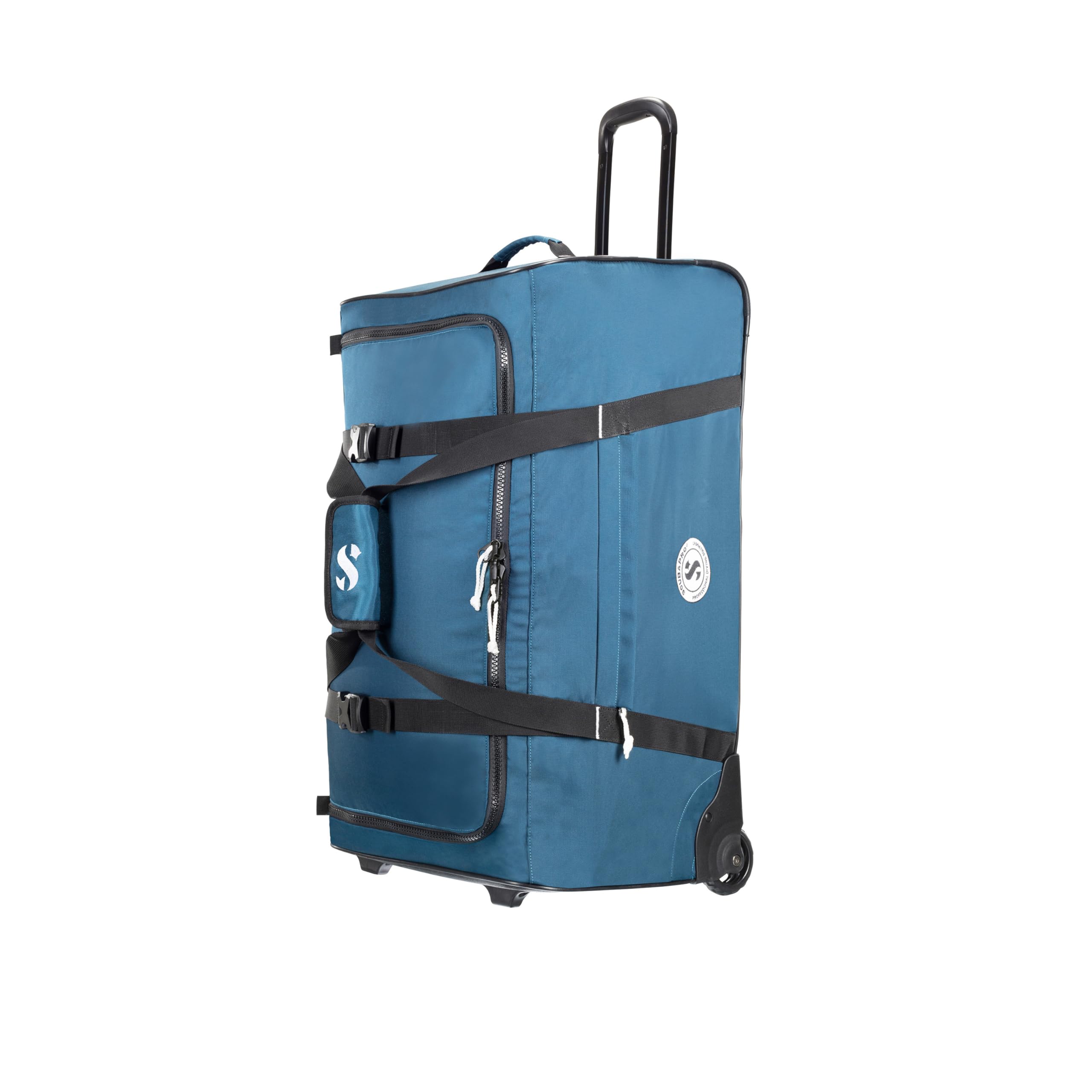
A solid choice if you want a dependable, easy-to-transport scuba gear bag that works well for both flights and local dives.
Pros
- Rolls smoothly through airports with minimal effort
- Multiple carry options for different situations
- Durable build that handles saltwater exposure well
Cons
- Bulkier than some lightweight travel bags
- Limited internal organization for small accessories
- Wheels may need maintenance after heavy use in sandy areas
This bag feels sturdy in hand and handles the weight of a full scuba setup without sagging. The telescopic handle locks firmly, so you can pull it across uneven ground without wobble. You’ll appreciate the compression straps when you don’t have it fully packed, as they keep the load stable.
When moving through a crowded terminal, the smooth-rolling wheels make a noticeable difference. Even when fully loaded with fins, wetsuit, and BC, it stays balanced and upright. The extra side and top pockets help you stash smaller items like dive gloves or logbooks, but inside, you’ll need to use your own pouches for better organization.
On a recent trip, it fit easily into a standard airport baggage belt without snagging or tipping. The fabric resists scuffs, and the zippers work cleanly even after exposure to saltwater spray. If you want one bag that works for both local car-to-boat trips and international flights, this is a reliable option.
AKONA Azul Mesh Backpack

If you want a lightweight, travel-friendly scuba gear bag that’s easy to carry and fits well on dive boats, this is a solid choice.
Pros
- Spacious enough for a full scuba kit
- Comfortable straps for long walks to the dock
- Quick-drying mesh keeps gear from staying damp
Cons
- Mesh design offers less protection for fragile items
- Limited small-item storage
- Bright color may show dirt over time
Carrying the AKONA Azul Mesh Backpack from your hotel to the dive boat feels effortless thanks to its ergonomic straps and side handles. The bag sits neatly under a bench, so you won’t trip over it or have to shuffle gear around.
Packing is quick because the full-length zipper opens wide, letting you slide in bulky fins or a wetsuit without wrestling them into place. The mesh fabric also means your gear starts drying the moment you leave the water, which helps keep smells down during travel.
While the soft-sided design is perfect for air travel weight limits, you’ll need to pack fragile items separately since it doesn’t provide rigid protection. Still, for divers who value portability and quick access over heavy-duty structure, the AKONA Azul Mesh Backpack makes a practical, dependable option.
Scuba Choice Mesh Dive Duffel

A practical choice if you want a durable, travel-friendly scuba gear bag that dries quickly and packs down small.
Pros
- Strong mesh and coated polyester hold up to repeated travel
- Folds compactly for easy packing when not in use
- Comfortable to carry with padded handle and long strap
Cons
- No dedicated exterior pocket for quick-access items
- Too small for carrying a full set of bulky gear including BCD
- Zipper pull is plastic, which may wear faster than metal
This bag feels sturdy in hand and manages your gear well for a day of diving. You can fit fins, mask, snorkel, wetsuit, and smaller accessories without feeling cramped. The mesh design allows wet gear to air out during the trip back from the dive site.
Carrying it through an airport or down to a dock is straightforward thanks to the padded grip and adjustable strap. The lightweight build makes it a good option for air travel where weight limits matter. When you’re done, it collapses into a compact shape that fits easily in your luggage.
If you travel light or keep your BCD separate, this bag works efficiently. However, if you need to pack everything in one piece, the space may feel limited. For most recreational divers flying with their own fins, wetsuit, and smaller items, it’s a dependable and easy-to-manage choice.
Buying Guide
When choosing a scuba gear bag for air travel, focus on size, weight, and durability. Airlines often have strict baggage limits, so a lightweight but sturdy bag helps you stay within restrictions.
Look for materials that resist wear, saltwater, and UV exposure. Common options include heavy-duty nylon or polyester with reinforced stitching.
A bag’s dimensions matter for both checked and carry-on use. Always check airline size rules before purchasing to avoid extra fees.
Key features to consider:
- Weight: Lighter bags reduce the chance of exceeding airline limits.
- Compartments: Separate sections help organize fins, masks, and regulators.
- Handles & Straps: Padded, adjustable options improve comfort during transport.
- Closure Systems: Heavy-duty zippers or buckles keep gear secure.
- Drainage: Mesh panels or grommets allow water to escape after dives.
| Feature | Why It Matters | What to Look For |
|---|---|---|
| Weight | Avoids excess baggage fees | Under airline weight limits |
| Material | Protects gear from damage and wear | Abrasion-resistant, water-repellent |
| Compartments | Keeps gear organized and protected | Padded dividers, separate wet/dry areas |
| Mobility | Makes transport easier | Wheels, telescopic handle, backpack straps |
| Ventilation | Reduces odor and moisture buildup | Mesh panels, drainage holes |
Check if the bag offers wheeled or backpack-style transport. Wheels are convenient in airports, while backpack straps can help on uneven terrain.
Always consider how much gear you typically carry. A bag that fits your full setup without wasted space is easier to handle and store.
Frequently Asked Questions
When selecting a scuba gear bag for air travel, you need to account for airline limits, gear protection, and ease of transport. Materials, design, and storage layout can significantly affect convenience and durability during trips.
What features should I look for in a high-quality scuba gear bag for air travel?
Look for lightweight yet durable materials such as high-denier nylon or polyester.
Reinforced stitching and corrosion-resistant zippers help withstand frequent handling.
Multiple compartments keep wet and dry gear separate for better organization.
How do I choose a dive bag with wheels that’s suitable for flying?
Select wheels that are large enough to roll smoothly over uneven surfaces.
A telescoping handle should lock securely and feel sturdy under load.
Check that the wheel housing is reinforced to resist impact damage during transit.
What are the advantages of a waterproof diving bag for international travel?
A waterproof bag protects your gear from rain, boat spray, and wet docks.
It also prevents moisture from leaking out if you pack damp equipment.
This can reduce the chance of odors and help meet airline cleanliness requirements.
Which brands offer the most durable scuba gear bags for frequent flyers?
Brands like Akona, Cressi, and Scubapro are known for reinforced construction and abrasion-resistant fabrics.
They often use heavy-duty zippers and padded panels for extra protection.
Many models from these brands are specifically designed to handle repeated air travel.
Are there any size or weight restrictions to consider when selecting a scuba dive bag for airline travel?
Most airlines limit checked bags to 50 lbs (23 kg) before extra fees apply.
Dimensions often must stay under 62 linear inches (length + width + height).
Always verify with your airline, as rules can vary by carrier and destination.
Can you recommend a dive bag that balances portability with ample storage space?
The Cressi Moby 5 offers a good balance with its lightweight frame and large capacity.
It has wheels, multiple compartments, and padded sections for delicate gear.
Its size works for most airline checked baggage requirements without wasting space.